

Driving on Northern Ireland’s roads is part of everyday life – but it comes with its risks. From busy urban traffic to rural roads, accidents can happen in an instant. Understanding the most common types of car accidents and how to prevent them can make a major difference in keeping you and others safe.
In this guide, we explore the main causes of car accidents in Northern Ireland and offer practical road safety tips to help you avoid them.
Rear-End Collisions
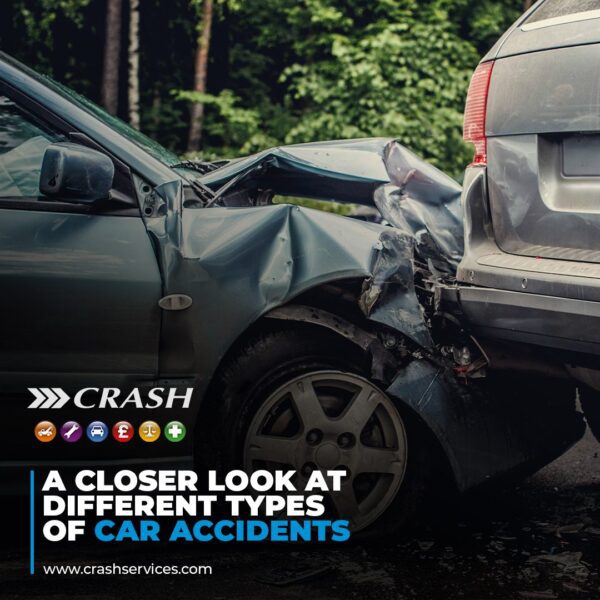
Rear-end accidents are among the most frequent road incidents across Northern Ireland. They occur when one vehicle collides with the back of another – often due to tailgating, distracted driving, or sudden braking.
How to Avoid Rear-End Collisions:
-
- Keep a safe following distance (the “two-second rule”).
- Stay focused – avoid checking your phone or adjusting the radio.
- Anticipate traffic flow and avoid harsh braking.
Side-Impact (T-Bone) Accidents
Also known as T-bone collisions, these happen when the front of one vehicle crashes into the side of another, commonly at junctions or crossroads. Causes include running red lights, failing to stop, or improper lane changes.
Prevention Tips:
-
- Always obey traffic lights and signs.
- Take extra care at junctions and roundabouts.
- Look both ways before crossing an intersection.
Read how CRASH Services helped customer Jane Bassett after she was hit at a crossing.
Head-On Collisions
Head-on accidents are among the most severe because they often occur at higher speeds. Causes include impaired driving, wrong-way driving, and unsafe overtaking.
To Avoid Head-On Collisions:
-
- Never overtake unless you have a clear view of the road ahead.
- Avoid driving when tired or distracted.
- Follow road markings and stay within your lane.
Single-Vehicle Accidents
Not all crashes involve other drivers. Single-vehicle accidents happen when a car loses control and hits a barrier, tree, or ditch – often due to speeding, poor weather, or road hazards.
Prevention Tips:
-
- Adjust your speed according to road and weather conditions.
- Keep tyres properly inflated and maintained.
- Avoid sharp turns or sudden braking on wet or icy roads.
Rollover Accidents
Rollover accidents happen when a vehicle flips onto its side or roof. Larger vehicles such as 4x4s and vans are more prone due to their higher centre of gravity. Speeding and overcorrection are common factors.
How to Reduce Rollover Risk:
-
- Avoid excessive speed, especially around corners.
- Steer smoothly – avoid sudden, sharp movements.
- Maintain tyre pressure and load your vehicle evenly.
Lane-Change Accidents
Changing lanes may seem simple, but it’s a common cause of minor and major collisions. These accidents occur when drivers fail to signal, check mirrors, or monitor blind spots.
To Avoid Changing Lane Accidents:
-
- Signal early and clearly before moving.
- Always check mirrors and blind spots.
- Only change lanes when it’s safe and legal to do so.
Roundabout Accidents
Roundabouts are designed to improve traffic flow, but they can still be hotspots for crashes. Roundabout accidents usually happen when drivers fail to give way, don’t indicate correctly, or misjudge the speed of other vehicles.
Roundabout Safety Tips:
-
- Give way to vehicles already on the roundabout.
- Use indicators to show your direction clearly.
- Maintain a steady speed and be aware of cyclists and motorbikes.
Making Northern Ireland’s Roads Safer
While it’s impossible to eliminate all risks, understanding these common types of car accidents in Northern Ireland helps you make informed and responsible choices behind the wheel.
By maintaining a safe distance, obeying signals, staying alert, and driving to the conditions, we can all help make Northern Ireland’s roads safer for everyone.
